
The Science of Renamel
Discover the compelling evidence behind our revolutionary ingredients—nano‑hydroxyapatite and xylitol—that are transforming oral care with proven results from clinical trials worldwide.
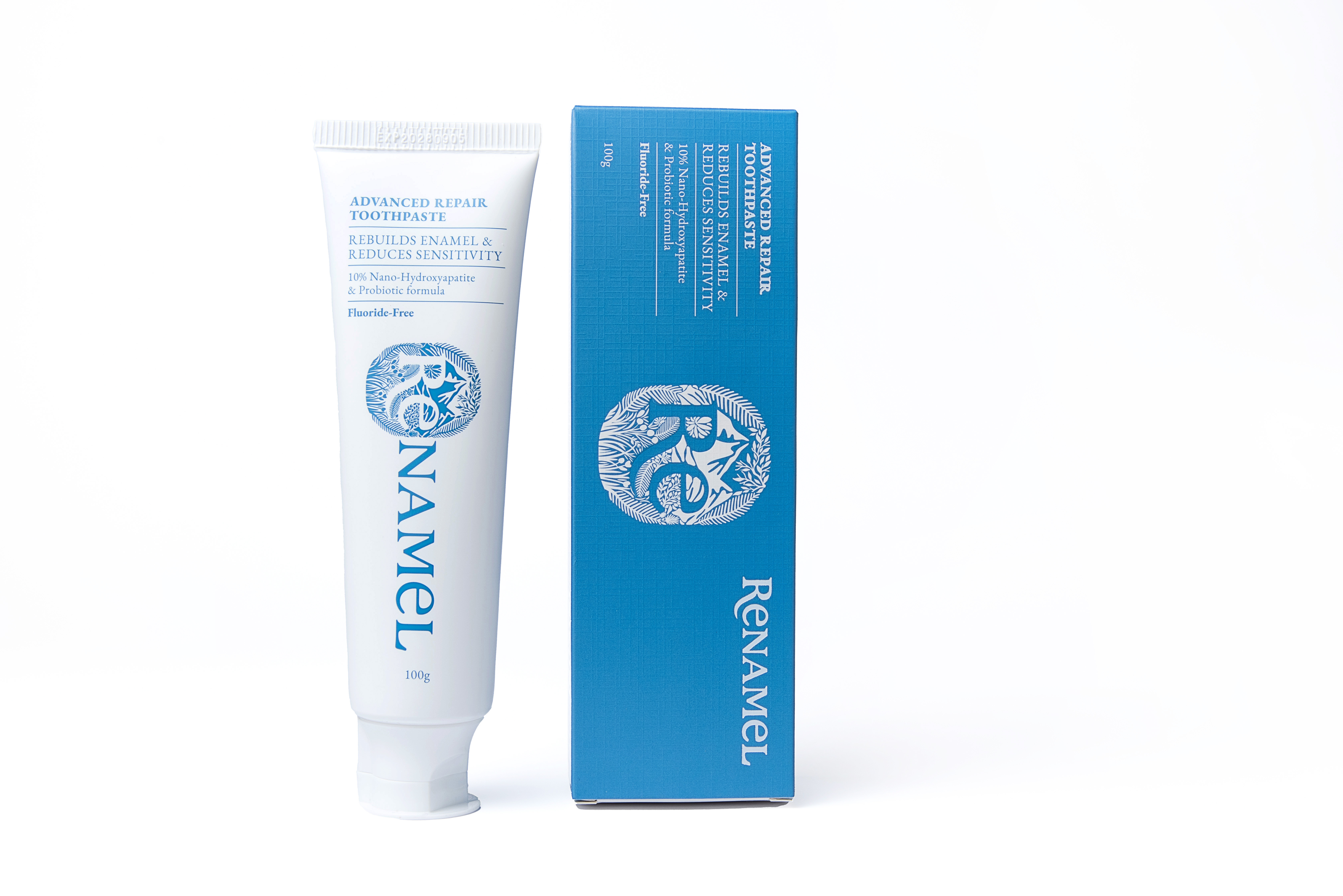
What Makes This Research Special?
The information presented about our ingredients is backed by peer‑reviewed clinical studies. From 18‑month randomised controlled trials to comprehensive systematic reviews, research consistently shows the properties of nano-hydroxyapatite and xylitol as documented in scientific literature—often matching or exceeding conventional treatments while being completely safe for all ages.
Nano‑Hydroxyapatite: The Enamel Rebuilder
Discover how this revolutionary biomimetic mineral—identical to natural tooth enamel—delivers comprehensive oral health benefits backed by decades of clinical research.
Nano‑Hydroxyapatite vs. Fluoride: Head‑to‑Head Studies
The gold standard of dental research—long‑term clinical trials—shows nano‑hydroxyapatite achieving comparable caries outcomes to fluoride, making it a compelling fluoride‑free alternative backed by rigorous science.
Head‑to‑Head Clinical Trial
Paszynska et al., 2023 conducted an 18‑month double‑blind randomised clinical trial comparing hydroxyapatite toothpaste directly against standard fluoride toothpaste in adults. The results were remarkable: 89.3% of hydroxyapatite users had no increase in cavities compared to 87.4% in the fluoride group—demonstrating that hydroxyapatite performs as well as fluoride for caries outcomes in clinical studies.
- Pawinska et al., 2024 — Updated systematic review and meta‑analysis found people using hydroxyapatite toothpaste were 2.51 times more likely to prevent dental caries compared to placebo, with a slight edge over fluoride (odds ratio 1.1 in favour of HAP). Study Link
- Wierichs et al., 2022 — Comprehensive systematic review found that under remineralising conditions (like normal saliva flow), nano‑hydroxyapatite showed the same remineralising potential as fluoride, supporting its use as an effective alternative. Study Link
Superior Remineralisation: Rebuilding Tooth Structure
Nano‑hydroxyapatite doesn't just match fluoride—multiple studies show it can outperform fluoride for enamel remineralisation and hardness recovery in laboratory testing, actively rebuilding tooth structure at the molecular level.
Laboratory Proof
Ebadifar et al., 2017 tested nano‑hydroxyapatite's ability to reharden artificially damaged teeth. The results were striking: teeth treated with 7% nano‑hydroxyapatite showed 143% recovery in hardness from the damaged state, while fluoride‑only treatment achieved just 116% recovery. The study concluded that nano‑hydroxyapatite "was more effective than fluoride‑only toothpaste for remineralisation."
- Juntavee et al., 2018 — Nano‑hydroxyapatite gel demonstrated "significantly higher capability for remineralisation" on both enamel and the tooth root surface compared to fluoride cream, with electron microscope images showing n-HAp particles directly depositing into damaged areas. Study Link
- Tschoppe et al., 2011 — Nano‑hydroxyapatite toothpastes showed higher remineralising effects on dentine compared to fluoride toothpaste, with the higher pH of n-HAp (6.94–7.39 vs fluoride's 5.24) appearing to favour deeper repair. Study Link
Rapid Sensitivity Relief: Clinically Demonstrated Results
Tooth sensitivity affects millions, but nano‑hydroxyapatite offers effective relief by physically sealing the microscopic channels that cause discomfort—with clinical studies showing significant improvements in just 2‑4 weeks.
Reported Improvements
Vano et al., 2014 conducted a double‑blind randomised trial with 15% nano‑hydroxyapatite toothpaste. Within just 2‑4 weeks, participants experienced significantly lower sensitivity to air and touch compared to both fluoride and placebo groups. Pain scores on standardised scales also dropped significantly, demonstrating nano‑hydroxyapatite's effectiveness for sensitivity relief.
- de Melo Alencar et al., 2019 — Systematic review and meta‑analysis of six randomised clinical trials found nano‑hydroxyapatite showed "better desensitising effect" for both air blast and touch stimuli compared to other approaches, concluding "better clinical performance than other treatments for sensitivity relief." Study Link
- Hu et al., 2018 — Meta‑analysis of 53 randomised controlled trials confirmed nano‑hydroxyapatite toothpastes are effective in relieving sensitivity symptoms by physically blocking dentine tubules, offering a different mechanism than potassium‑based approaches. Study Link
Natural Whitening: Beauty Through Restoration
Unlike harsh bleaching chemicals, nano‑hydroxyapatite whitens teeth by restoring their natural structure—filling micro‑defects, smoothing surfaces, and creating a naturally bright, healthy appearance that research shows can be more effective than traditional whitening approaches.
Appearance Research Findings
Limeback et al., 2023 reviewed 17 studies on hydroxyapatite whitening and discovered the elegant mechanism: nano‑hydroxyapatite creates an immediate brightening effect by filling micro‑defects and adhering to enamel, while long‑term use builds up a white, opaque layer that "not only makes the tooth appear whiter, but also blocks the reflection of incoming light off the darker yellow dentin." The conclusion: "regular use of hydroxyapatite‑containing oral care products effectively whitens teeth."
Microbiome Support: Reducing Harmful Bacteria
Beyond rebuilding teeth, nano‑hydroxyapatite actively supports oral health by reducing harmful bacterial colonisation—creating an environment where healthy teeth can thrive naturally.
- Pawinska et al., 2024 — Meta‑analysis of studies where people wore enamel samples in their mouths showed hydroxyapatite significantly reduced bacterial load by an average of 65% compared to negative controls. Study Link
- Ionescu et al., 2020 — Laboratory study found substituted nano‑hydroxyapatite toothpastes significantly reduced early bacterial colonisation and biofilm formation, with effects most pronounced at 12 hours—suggesting twice‑daily use provides optimal protection against harmful bacteria. Study Link
The Complete Science: Why Nano‑Hydroxyapatite Works
The beauty of nano‑hydroxyapatite lies in its biomimetic nature—it's essentially the same mineral that makes up 97% of tooth enamel, allowing it to integrate seamlessly with natural tooth structure.
The Molecular Match
Pushpalatha et al., 2023 explained the elegant mechanism in their comprehensive review: "n-HAp acts as a calcium phosphate reservoir, keeping a state of super‑saturation with regard to enamel minerals, enhancing remineralisation and inhibiting demineralisation." Because it's structurally similar to natural enamel, nano‑hydroxyapatite can directly replace lost minerals in early cavities—making it a "promising revolutionary material" for oral health.
Safety for All Ages: The Fluoride‑Free Advantage
Perhaps most importantly, nano‑hydroxyapatite offers all these benefits with naturally safe active ingredients if accidentally swallowed—making it the ideal choice for children and families who prefer fluoride‑free oral care. While we recommend spitting out toothpaste after brushing (as with any oral care product), parents can have peace of mind knowing the active ingredients are naturally safe.
👨👩👧👦 Family‑Friendly Science
Multiple studies emphasise nano‑hydroxyapatite's safety advantage. Pawinska et al., 2024 specifically noted it as an "ideal substitute for fluoride in toothpaste and mouthwash tailored for young children" while being suitable "for people of all ages." This safety profile, combined with proven efficacy, makes nano‑hydroxyapatite the perfect choice for health‑conscious families.
Xylitol: Nature's Bacterial Fighter
Explore the remarkable science behind xylitol—a natural sweetener that actively fights cavity‑causing bacteria while providing long‑lasting protection for the whole family.
Proven Long‑Term Caries Protection
Clinical research demonstrates that xylitol provides remarkable long‑term protection against cavities, with benefits that can last up to two years even after stopping use—making it an exceptional preventive ingredient.
Sustained Effects
Campus et al., 2013 conducted a groundbreaking study with high‑risk children, giving them high‑dose xylitol gum for six months, then following them for two additional years. The results were impressive: even two years after stopping xylitol use, the children who had used xylitol had significantly fewer new cavities than those who never used it. The study concluded that this "preventive programme based on 6 months' administration of a high dose of xylitol via chewing gum proved to be efficacious in controlling caries increment in high‑risk children."
- Janakiram et al., 2017 — Comprehensive systematic review and meta‑analysis of 20 clinical studies found xylitol significantly reduces the incidence of cavities and serves as an effective self‑applied preventive agent. The review confirmed xylitol's unique mechanism of disrupting harmful bacteria's energy production, leading to "a futile energy consumption cycle and cell death." Study Link
- Riley et al., 2015 — This prestigious Cochrane review found that fluoride toothpaste containing xylitol may reduce tooth decay in permanent teeth by 13% over 3 years compared to fluoride‑only toothpaste, concluding that the combination "may be more effective than fluoride‑only toothpaste for preventing caries." Study Link
Superior Plaque Control: Direct Anti‑Microbial Action
Unlike passive sweeteners, xylitol actively fights the bacterial biofilm that causes both cavities and gum disease—providing a dual benefit for comprehensive oral health through its unique bacterial‑starving mechanism.
Bacteria‑Starving Mechanism
Nayak et al., 2014 revealed xylitol's elegant bacterial warfare: when harmful bacteria attempt to consume xylitol, they become trapped in a "futile energy cycle," essentially "unwittingly contributing to their own death." This direct anti‑microbial action makes xylitol an active, bacteria‑fighting ingredient that goes far beyond simple cavity prevention.
- Nasseripour et al., 2022 — Meta‑analysis of eight studies found that chewing xylitol gum "significantly reduced plaque quantity" compared to other gums. This plaque reduction stems from xylitol's "direct anti‑microbial effect on growth and accumulation of the biofilm," providing benefits for both cavity prevention and gum health. Study Link
- Söderling & Pienihäkkinen, 2025 — Recent systematic review comparing xylitol to other sugar alcohols found "the best evidence of specific beneficial effects for xylitol gum" in reducing harmful bacteria and plaque. Unlike sorbitol, xylitol consistently and significantly lowered cavity‑causing bacteria, confirming its unique benefits. Study Link
Dosage Matters: The Key to Effectiveness
Research reveals that xylitol's effectiveness is dose‑dependent, with higher concentrations providing more significant benefits—crucial information for choosing effective xylitol‑containing products.
Dosage Research Findings
Marghalani et al., 2017 conducted a systematic review specifically examining dosage effects and found that while overall evidence quality varied, "studies with higher xylitol doses (greater than four grams per day) demonstrated a medium caries reduction." This finding emphasises the importance of choosing xylitol products with meaningful concentrations rather than trace amounts.
Beyond Sugar Substitution: Unique Benefits
What sets xylitol apart from other sugar‑free sweeteners is its proven active benefits—it's not just avoiding harm, but actively promoting oral health through targeted bacterial intervention that other polyols simply can't match.
Bacterial Selectivity Studies
The beauty of xylitol lies in its specificity: it selectively targets Streptococcus mutans—the primary cavity‑causing bacteria—while leaving beneficial oral bacteria largely unaffected. This precision makes it an ideal daily‑use ingredient that supports natural oral microbiome balance while eliminating harmful species.
The Research Verdict
The evidence speaks for itself: Both nano‑hydroxyapatite and xylitol deliver comprehensive oral health benefits backed by rigorous clinical research. From nano‑hydroxyapatite's enamel rebuilding and fluoride‑equivalent caries outcomes to xylitol's unique bacterial‑fighting action and long‑term protection—all while being completely safe for the whole family—these ingredients represent the future of evidence‑based oral care.
Every study cited above is peer‑reviewed and published in respected dental journals. We continuously monitor new research to ensure our information remains current and accurate.
Bibliography
- Campus, G., et al. (2013). Six months of high‑dose xylitol in high‑risk caries subjects—a 2‑year randomised clinical trial. Clinical Oral Investigations, 17(3), 785–791. https://doi.org/10.1007/s00784-012-0774-5
- de Melo Alencar, C., et al. (2019). Clinical efficacy of nano‑hydroxyapatite in dentin hypersensitivity: A systematic review and meta‑analysis. Journal of Dentistry, 82, 11–21. https://doi.org/10.1016/j.jdent.2018.12.014
- Ebadifar, A., et al. (2017). Effect of nano‑hydroxyapatite toothpaste on microhardness of artificial carious lesions created on extracted teeth. Journal of Dental Research, Dental Clinics, Dental Prospects, 11(1), 14–17. https://doi.org/10.15171/joddd.2017.003
- Hu, M.‑L., et al. (2018). Effect of desensitizing toothpastes on dentine hypersensitivity: A systematic review and meta‑analysis. Journal of Dentistry, 75, 12–21. https://doi.org/10.1016/j.jdent.2018.05.012
- Ionescu, A. C., et al. (2020). Substituted Nano‑Hydroxyapatite Toothpastes Reduce Biofilm Formation on Enamel and Resin‑Based Composite Surfaces. Journal of Functional Biomaterials, 11(2), 36. https://doi.org/10.3390/jfb11020036
- Janakiram, C., et al. (2017). Xylitol in preventing dental caries: A systematic review and meta‑analyses. Journal of Natural Science, Biology and Medicine, 8(1), 16–21. https://doi.org/10.4103/0976-9668.198344
- Juntavee, N., et al. (2018). Remineralization potential of nano‑hydroxyapatite on enamel and cementum surrounding margin of computer‑aided design and computer‑aided manufacturing ceramic restoration. International Journal of Nanomedicine, 13, 2755–2765. https://doi.org/10.2147/IJN.S165080
- Limeback, H., et al. (2023). Tooth Whitening with Hydroxyapatite: A Systematic Review. Dentistry Journal, 11(2), 50. https://doi.org/10.3390/dj11020050
- Marghalani, A. A., et al. (2017). Effect of xylitol on incidence of dental caries: systematic review and meta‑analysis. Journal of Public Health Dentistry, 77(1), 16–26. https://doi.org/10.1111/jphd.12177
- Nasseripour, M., et al. (2022). Effects of Xylitol and Polyol Chewing Gums on Salivary Biomarkers and Dental Plaque in Orthodontic Patients: A Systematic Review and Meta‑Analysis. Frontiers in Oral Health, 3, 845921. https://doi.org/10.3389/froh.2022.845921
- Nayak, P. A., et al. (2014). The effect of xylitol on dental caries and oral flora. Clinical, Cosmetic and Investigational Dentistry, 6, 89–94. https://doi.org/10.2147/CCIDE.S55761
- Paszynska, E., et al. (2023). Caries‑preventing effect of a hydroxyapatite‑toothpaste in adults: a 18‑month double‑blinded randomized clinical trial. Frontiers in Public Health, 11, 1199728. https://doi.org/10.3389/fpubh.2023.1199728
- Pawinska, M., et al. (2024). Clinical evidence of caries prevention by hydroxyapatite: An updated systematic review and meta‑analysis. Journal of Dentistry, 151, 105429. https://doi.org/10.1016/j.jdent.2024.105429
- Pushpalatha, C., et al. (2023). Nanohydroxyapatite in dentistry: A comprehensive review. The Saudi Dental Journal, 35(6), 741–752. https://doi.org/10.1016/j.sdentj.2023.05.018
- Riley, P., et al. (2015). Xylitol‑containing products for preventing dental caries in children and adults. Cochrane Database of Systematic Reviews, 3, CD010743. https://doi.org/10.1002/14651858.CD010743.pub2
- Söderling, E., & Pienihäkkinen, K. (2025). Effects of xylitol and other polyols on oral health: a systematic review. BMC Oral Health, 25, 74. https://doi.org/10.1186/s12903-025-06602-1
- Tschoppe, P., et al. (2011). Enamel and dentine remineralization by nano‑hydroxyapatite toothpastes. Journal of Dentistry, 39(6), 430–437. https://doi.org/10.1016/j.jdent.2011.03.008
- Vano, M., et al. (2014). Effectiveness of nano‑hydroxyapatite toothpaste in reducing dentin hypersensitivity: A double‑blind randomized controlled trial. Quintessence International, 45(8), 703–711. https://doi.org/10.3290/j.qi.a32240
- Wierichs, R. J., et al. (2022). Efficacy of nano‑hydroxyapatite on caries prevention—a systematic review and meta‑analysis. Clinical Oral Investigations, 26, 3373–3381. https://doi.org/10.1007/s00784-022-04390-4